

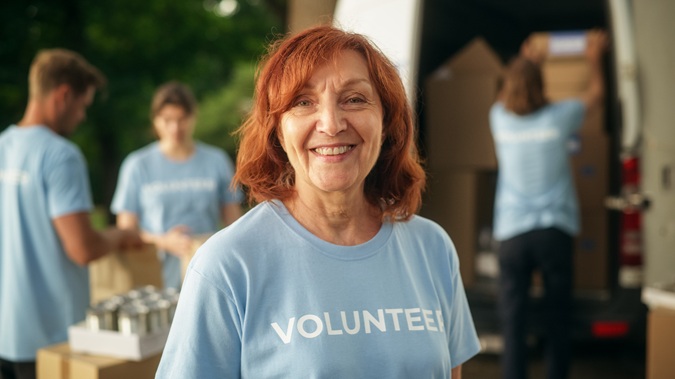
Volunteering is a powerful force that enriches both individuals and the communities they serve. It can provide purpose, connection, and fulfillment during later stages of life. Volunteering can also have significant health benefits.
Across the United States, older adults represent one of the most active and committed groups of volunteers. National data show that nearly 30 percent of all U.S. volunteers are age 55 and older. Collectively, adults in this age group contribute billions of hours of service each year, supporting nonprofit organizations, schools, healthcare systems, faith-based groups, and civic initiatives. When measured economically, the service provided by volunteers exceeds $100 billion annually, underscoring the significant role they play in strengthening communities nationwide (AmeriCorps).
Volunteering as an older adult offers benefits that extend well beyond the immediate impact of service. As individuals transition into retirement or adjust to changes in work and family roles, many seek meaningful ways to remain active, engaged, and socially connected. Volunteerism provides a powerful avenue to meet these needs while simultaneously strengthening the organizations and communities that rely on volunteer support.
One of the most significant advantages of volunteering for older adults is its positive effect on mental and emotional well-being. Numerous studies have shown that regular volunteer activity is associated with reduced stress, improved mood, and a lower likelihood of depression. The sense of purpose that comes from contributing to a cause, combined with the social interaction inherent in volunteer roles, helps counter feelings of isolation that can sometimes arise later in life. Engaging in structured, meaningful activities also supports cognitive health by providing mental stimulation that helps maintain memory, focus, and overall cognitive resilience.
Physical health benefits are also well documented. While volunteer roles vary in their physical demands, even moderate activities—such as assisting at community events, mentoring youth, or providing administrative support—encourage movement, routine, and a more active lifestyle. Research suggests that older adults who volunteer regularly often report better overall health, fewer chronic pain symptoms, and increased longevity. The combination of physical activity, social engagement, and emotional fulfillment creates a strong foundation for healthier aging.
Volunteering also allows older adults to apply their skills, knowledge, and life experience in meaningful ways. Many individuals in this age group bring decades of professional expertise, leadership experience, and interpersonal insight into their service. Nonprofit organizations benefit greatly from this depth of knowledge, whether through mentoring, tutoring, board service, or specialized project support. For volunteers themselves, continuing to contribute their talents fosters confidence, reinforces identity, and promotes ongoing learning and personal growth.

Social connection is another essential benefit of volunteerism. As social networks shift due to retirement, relocation, or changes in family dynamics, volunteering creates new opportunities to build relationships and feel part of a community. Intergenerational volunteer settings can be especially meaningful, offering opportunities for older adults to share perspectives, build mutual understanding, and form connections with younger generations.
In Dubuque, there are countless ways to volunteer. Interested individuals can view opportunities at Volunteerdbq.com or contact non-profit organizations directly. The wide variety of opportunities includes mentoring, leading exercise groups, gardening, administrative support, greeting visitors, providing companionship, preparing meals, tutoring, and more. There are opportunities for every interest and skill level. Some organizations even offer unique volunteer benefits such as free meals or Wellness Center membership.
Regardless of the type of service, the impact of older adult volunteers on communities is profound. It is an essential component of healthy aging and a powerful tool for building stronger, more connected communities.
Sarah Candee is the Volunteer Coordinator at Stonehill Communities. In this role, she has had the privilege of building relationships with volunteers, creating meaningful engagement opportunities, and supporting programs that empower older adults to live well.
This article was originally published in CHOICES For Fifty Plus, a Dubuque area magazine for people that are 50 and older. Single copies are available at Dubuque area newsstands or click here to read the digital version of the latest issue.
Read Julien’s Journal, CHOICES For Fifty Plus and Tri-State Home TRENDS from the Comfort of Your Home!
Click Here or call 563.557.7571 for convenient delivery to your home or business by mail of all three magazines for one low subscription price.

Comment here